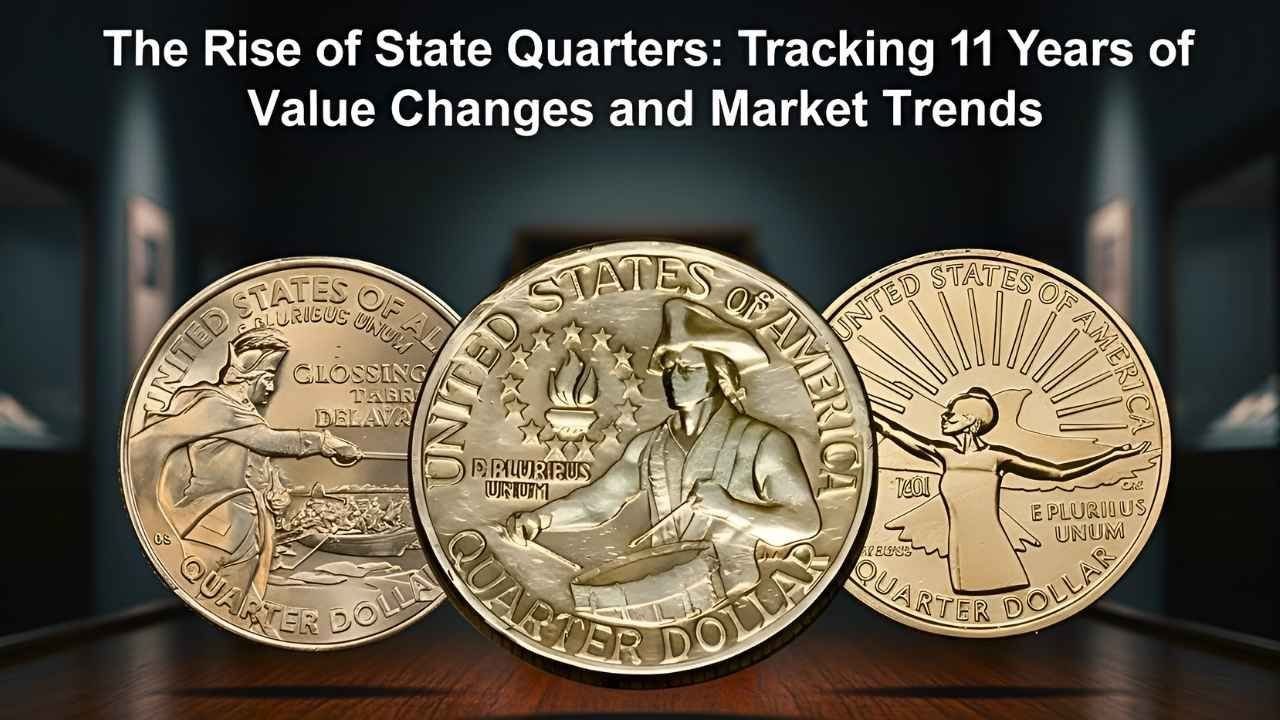
When the U.S. Mint launched the State Quarters program in 1999, nobody expected it to become one of the most successful coin-collecting movements in modern history. Over the next 11 years — including the 2009 District of Columbia & U.S. Territories follow-up — millions of Americans became casual collectors, hunting through pocket change, storing coffee cans full of quarters, and trading duplicates with family and friends.
Today, more than a decade after the final release, the market for state quarters continues to evolve. Certain issues have grown in value, while others remain nostalgic but common. Understanding why some quarters spiked in price and how overall trends shifted can help enthusiasts make smarter collecting decisions.
How the 11-Year Timeline Unfolded
-
1999–2008: Five state designs were released each year, showcasing history, landmarks, and cultural themes from all 50 states.
-
2009: Six additional designs honored the District of Columbia, Puerto Rico, Guam, American Samoa, the U.S. Virgin Islands, and the Northern Mariana Islands.
This extended run is why collectors often refer to “11 years of state quarters.”

What Influenced Value Changes
1. Widespread Participation
Millions of people collected these coins — more than any coin series in U.S. history. This created huge demand for high-quality, uncirculated pieces and proof sets.
2. Minting Numbers
Some designs were produced in far greater volume than others. Quarters with lower mintages tend to hold higher premium values, especially in high grades.
3. Condition and Grading

Most state quarters in circulation today are worth face value. The real value lies in:
- Uncirculated rolls
- Certified high-grade coins
- Silver proof sets
Coins professionally graded at the top end (MS67, MS68, and above) can sell for much more than raw coins.
4. Variety and Error Coins
Certain quarters have unique mint errors that dramatically boost value. Famous examples include the 2004 Wisconsin quarter with an “extra leaf.” These rare varieties have sold for hundreds or even thousands of dollars.
Market Trends Over Time
Initial Years (1999–2004):

The novelty of rotating quarter designs created excitement. Sales of mint products surged, and many households started collections.
Middle Period (2005–2010):
By this point, serious collectors focused more on quality and completeness. Casual hoarders slowed down, but market interest remained strong for rare or high-grade coins.
Modern Market (2011–Present):
State quarters have formed a stable collector base. While most circulated coins bring only face value, premium issues — especially certified, silver, or error coins — continue to be actively bought and sold.

Coins Worth Watching Today
- Silver proof state quarter sets
- Low-mintage Denver or Philadelphia issues in high grades
- 2004 Wisconsin “Extra Leaf” varieties
- Professional Coin Grading Service (PCGS) or NGC certified MS68-level coins
These are the types of pieces most likely to appreciate over time.
FAQ The Rise of State Quarters
1. Are most state quarters valuable?
Most circulated state quarters are worth 25 cents. Value primarily comes from condition, certification, low mintages, or recognized errors.
2. What are the most valuable state quarters?
Error varieties, high-grade certified coins, and silver proof issues tend to bring the highest prices.
3. Should I keep state quarters I find in change?
Yes — especially unusual-looking coins, coins in perfect condition, or anything from sealed mint sets.
4. Do state quarters appreciate in value over time?
Some do, especially graded or rare versions. Common circulated coins generally remain face value.

5. What’s the best way to evaluate a state quarter?
Check the date, mintmark, and condition, and compare against coin price guides. For high-level pieces, professional grading offers the most accurate evaluation.
