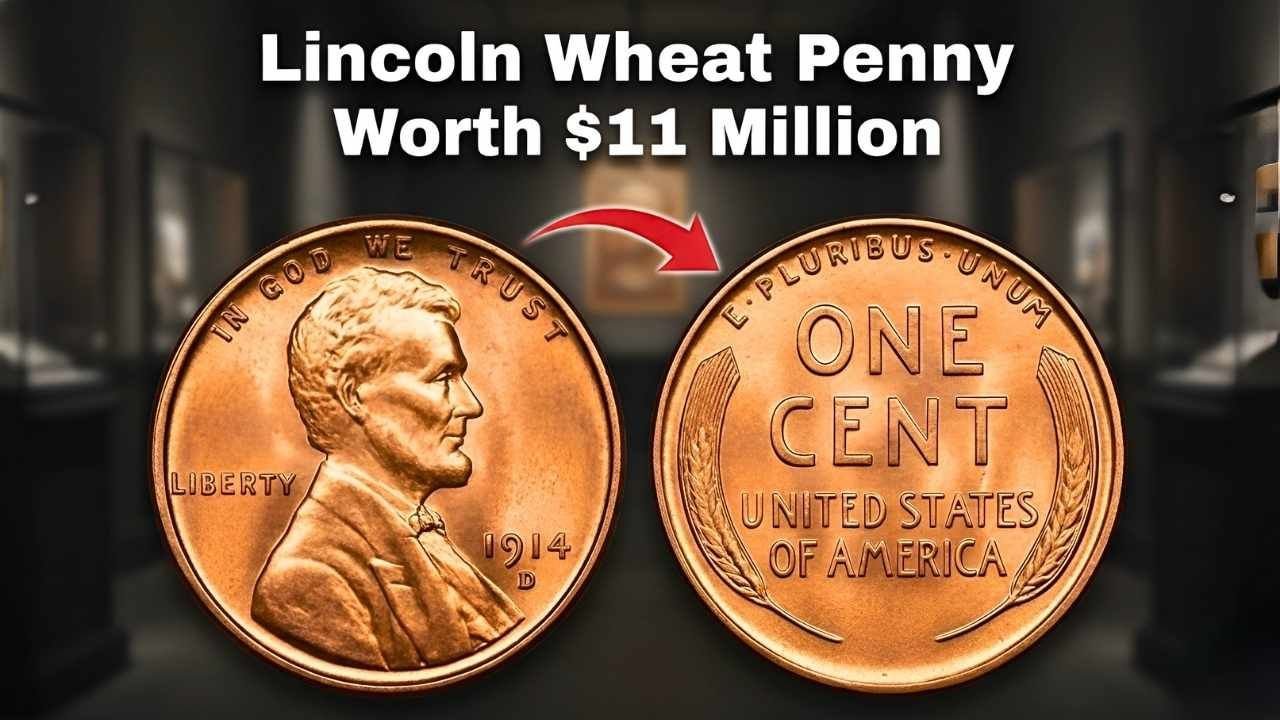
Everyday coins are easy to overlook. They sit in car cup holders, hide at the bottom of purses, and gather dust inside old jars. But what if one of those worn copper pennies is actually a hidden fortune? The buzz in the collector world today revolves around a rare Lincoln Wheat penny rumored to be worth $11 million — and the possibility that one might still be hiding in random pocket change.
It sounds unbelievable, but history shows valuable coins sometimes slip through unnoticed. That’s why collectors are paying attention.
Why Some Wheat Pennies Are Worth Millions
The Lincoln Wheat penny, minted from 1909 to 1958, is one of the most collected U.S. coins. Most are common, especially those from the late 1940s and 1950s. But a tiny number were struck with:
- Wrong metal compositions
- Rare mint errors
- Limited mint runs
- Historical quirks
These unusual factors create immense scarcity. Combine that scarcity with strong collector demand, and the value can reach into the millions.
The penny connected to the $11 million valuation is tied to a mix of extreme rarity and near-perfect preservation — something almost never seen outside serious collections.

Could an $11 Million Penny Still Be in Circulation?
It’s not impossible. Wheat pennies still show up in:
-
Coin rolls from banks
-
Change from vending machines
-
Attic boxes and estate sales
-
Old coffee cans or mason jars

Most people don’t know what to look for, so rare coins can pass through countless hands unnoticed. That’s exactly how valuable discoveries have been made in past decades.
While finding a penny worth millions is incredibly rare, even more modest Wheat pennies can be worth hundreds or thousands of dollars.
Dates That Collectors Watch Closely
If you want to start searching, pay attention to these famous Wheat penny dates:
- 1909-S VDB
- 1914-D
- 1922 “No D”
- 1931-S
- 1943 Copper error
- 1944 Steel error
These are among the most valuable known examples. But there are also double-die errors, repunched mint marks, and unusual strikes worth investigating.
How to Check Your Wheat Pennies
-
Look at the year and mint mark.
The mint mark is a small letter under the date:
- “D” = Denver
- “S” = San Francisco
- No letter = Philadelphia
- Examine the coin’s condition.
Shiny, undamaged coins are usually worth more. -
Watch for weird metal or color.
For example, a copper-looking 1943 penny is extremely valuable. -
Use a magnifying glass.
Small errors mean big value. -
Never clean a coin.
Cleaning reduces value dramatically.
Where to Get a Rare Penny Authenticated
If you think you’ve discovered something special, don’t rush to sell it. Instead:
- Store it safely in a coin holder or small plastic flip
- Take clear pictures
- Contact a professional grading service
Top graders include:

- PCGS (Professional Coin Grading Service)
- NGC (Numismatic Guaranty Company)
They provide certification and help establish real market value.
FAQ Rare Lincoln Wheat Penny Worth $11 Million
1. Is there really a Wheat penny worth $11 million?
Yes — a rare and extremely valuable Wheat penny has been valued at up to $11 million by collectors, largely due to rarity and condition.
2. Can average people find Wheat pennies today?
Absolutely. Many are still in circulation, especially in older banks and coin jars.
3. What years should I look for first?
The most famous valuable years include 1909-S VDB, 1914-D, 1922 No D, 1943 copper, and 1944 steel.
4. Should I keep every Wheat penny?
It’s smart to save them. Even common Wheat pennies are collectible and often worth more than face value.

5. What’s the biggest mistake beginners make?
Cleaning coins — it destroys value. Always keep coins in original condition.
